Choosing a small aquarium heater: watts, types and placement
A small aquarium heater has one job — keep the water steady — but small tanks make that harder, because a few litres of water cool quickly at night. These are the decisions that matter.
Watts per gallon
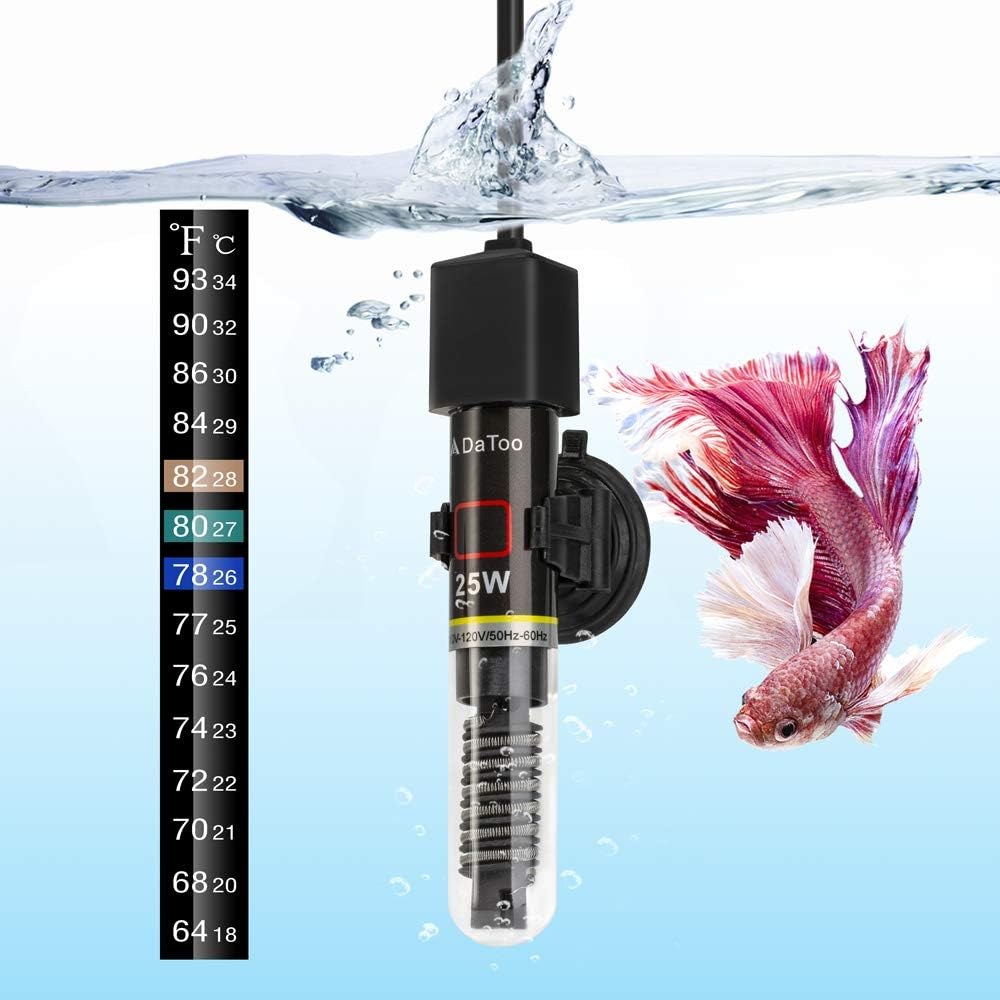
Start with 3 to 5 watts per gallon in a heated room. A 5-gallon tank needs about 25 W, a 10-gallon about 50 W, a 20-gallon about 100 W. In a cold room or a tank without a lid, go one size up; an oversized heater with a good thermostat just switches off sooner.
Preset, adjustable or flat
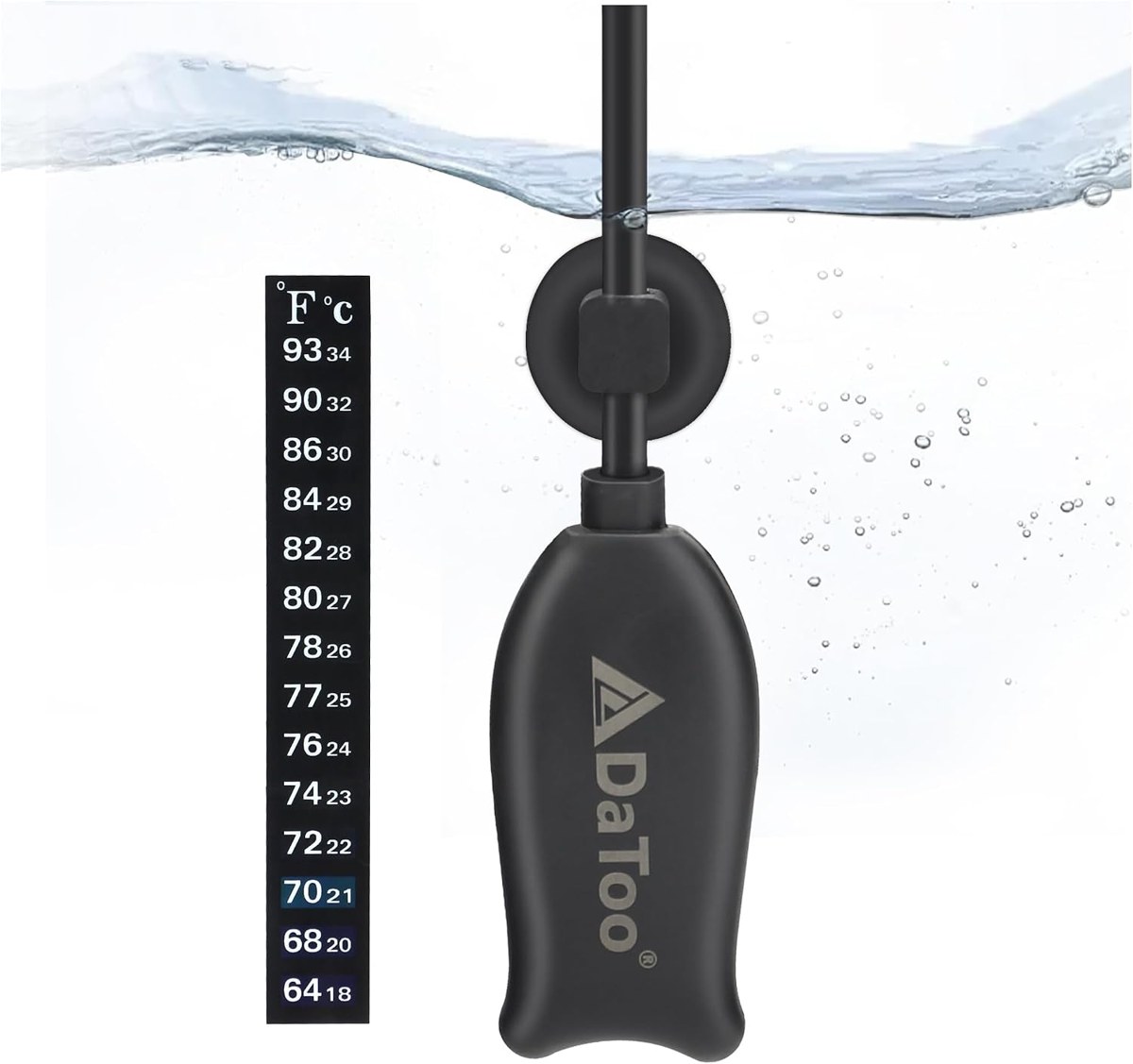
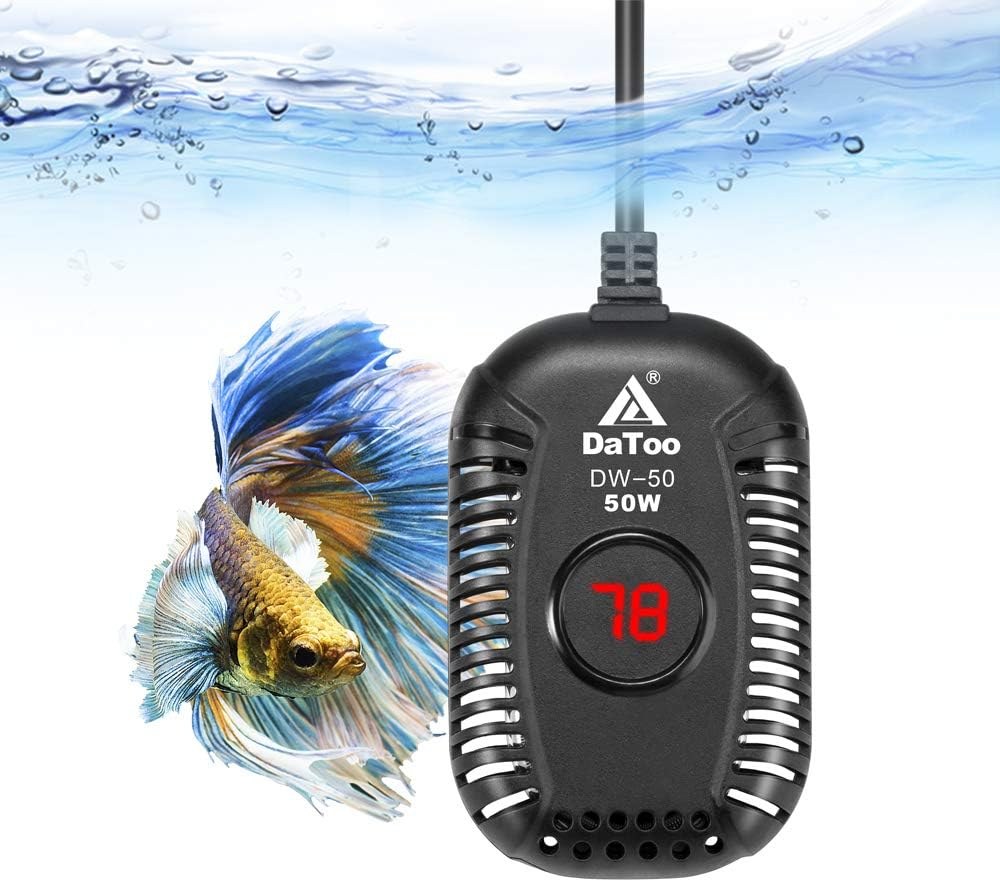
- Preset heaters hold one temperature — DaToo's mini heater keeps 78°F. Ideal for a betta, with nothing to set wrong.
- Adjustable heaters have a knob or dial (63 to 95°F across DaToo models) for fish that like it cooler or warmer, or for treating disease.
- Flat PTC heaters are thin pads with no glass, for bowls under 2 gallons. They warm the water a few degrees above the room rather than to a set point.
The best heater for a betta tank
For 1 to 6 gallons, a 25 W preset heater is the simplest choice: it is small enough to hide, and 78°F is what bettas want. Under 2 gallons, a 6 W or 10 W flat heater fits better. Whatever you choose, add a separate thermometer at the other end of the tank.
Where to put it
Put the heater near the filter outflow so the warm water spreads, keep it fully submerged, and don't bury it in gravel. Leave the plug above water and loop the cable below the socket so drips can't run into it.
Submersible tank heaters vs other types
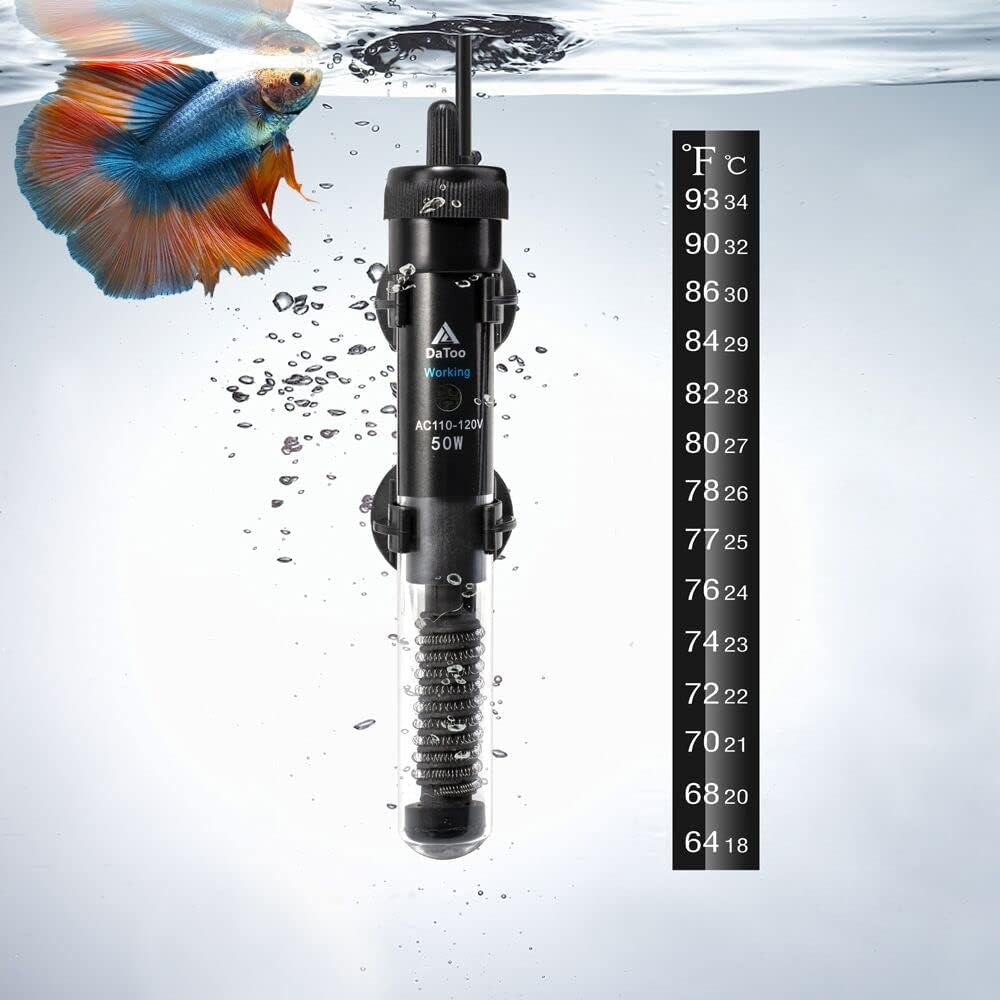
Most fish tank heaters are submersible: a glass, quartz or titanium tube that lies fully under water. They suit freshwater and saltwater aquariums from a few gallons upward and heat evenly when the filter moves water past them. Flat PTC pads are the alternative for bowls and nano tanks, and inline heaters sit outside the aquarium in a canister filter hose. For a planted tank, any of these works — plants like the same steady habitat as fish.
Lids, hoods and canopies
A lid, hood or glass canopy does half of the heater's job by stopping evaporation, which carries heat away. Open-top aquariums need a bigger heater, and the water level must stay above the heater's minimum line as it evaporates.
Temperature control and the thermometer
Automatic temperature control is what you pay for: the heater should switch off on its own when the water reaches the set point. Check it with a separate thermometer at the far end of the aquarium. If the reading is a degree or two off, adjust the dial rather than adding another heater.
Care and maintenance
Heater care is part of normal aquarium maintenance: wipe the tube during water changes, check the seal and the cable, and watch that the indicator light cycles on and off. It's also worth keeping a spare heater with your other equipment — pumps, filters and lighting can wait a day, but a cold snap can't.